
Stacey K. Chambliss, M.A.
Volunteer Services Coordinator and Webmaster, Passport in Time Clearinghouse
Ms. Stacey Chambliss holds a B.A. in anthropology from Occidental College, Los Angeles, California and a M.A. in anthropology (archaeology) from the University of New Mexico, Albuquerque, New Mexico. Recent academic endeavors involved work on a dissertation study entitled “Colonial Interaction and Indigenous Responses: Pre-Roman and Roman Común Ceramics in Northwest Spain.” The study intends to examine ceramic technology and decoration by delving into whether one can see group identity through the maintenance or transformation of daily practice at a time of change, namely the Roman invasion of Northwestern Spain. Ms. Chambliss has over a decade of field, laboratory, and academic experience in European, Southeastern and Southwestern archaeology. She has served in a number of roles for state, national, academic and cultural resource management firms in the Southeast and Southwest of the United States and abroad in Europe. She has also served anthropology in a public outreach and educational role through working and volunteering at the Pacific Asia Museum, Maxwell Museum of Anthropology, Colonial National Historic Park – Jamestown, Saint-Gaudens National Historic Site, Mission San Luis Historical Site, and others where she interacted with the public in various capacities. She currently fills the position of Volunteer Services Coordinator and Webmaster of the Passport in Time Clearinghouse, a program conducted through a cooperative agreement with the USDA Forest Service. Close Window

David Cushman, M.A. RPA
Program Manager, Historic Preservation Programs
David Cushman earned his B.A. with honors in anthropology from the University of Massachusetts at Amherst in 1980 and his M.A. in anthropology in 1989 from the University of New Mexico. Mr. Cushman has been involved in historic preservation and cultural resources management for more than 25 years. Mr. Cushman worked as an archaeologist for the Peabody Museum at Harvard University, Southern Illinois University, the Arkansas Archaeological Survey, the Museum of New Mexico and the National Park Service, among others. In 1989 he joined the staff at the New Mexico Historic Preservation Division (HPD) in Santa Fe, New Mexico, becoming the Deputy State Historic Preservation Officer for the archaeology program in 1996. During his nine years with HPD, Mr. Cushman developed expertise in local, state and federal preservation law, engaged in extensive public outreach and education, and was an instructor in the Division’s Section 106 training program. He also administered the Santa Fe County archaeological ordinance and assisted local governments across the state of New Mexico in developing and achieving their preservation goals. Upon leaving the New Mexico HPD in 1998, Mr. Cushman’s joined the Pima County Cultural Resources Office in Tucson, Arizona. While working for Pima County, Mr. Cushman conducted historic preservation in the context of the county’s administrative, planning, zoning and capital improvement programs. His responsibilities included providing technical advice to county staff and ensuring that county public works projects and private development actions complied with county, state and federal historic preservation requirements. Between 1999 and 2002, Mr. Cushman was a member of the county’s planning team that developed the Sonoran Desert Conservation Plan, a visionary long-term regional planning effort designed to balance natural and cultural resources conservation with growth and development. Mr. Cushman prepared the cultural resource element of the plan. The Sonoran Desert Conservation Plan was awarded the Outstanding Planning Award for a Plan by the American Planning Association in 2002. Mr. Cushman joined the Foundation in 2004 where he provides government and private sector clients with technical training, consultative services, and research products. Mr. Cushman is a former member and Chair of the State of Arizona, Governor’s Archaeology Advisory Commission and is currently Chair of the Society for American Archaeology, Government Affairs Committee. He has authored and co-authored numerous articles and technical reports on historic preservation and cultural resources management. Close Window

Matt K. Dawson, M.S.
Program Manager, Passport in Time Clearinghouse
Mr. Matt Dawson holds a B.S. in anthropology and a M.S. in anthropology (archaeology), both earned from the University of New Mexico. He is currently a PhD candidate in the archaeology program at the university, with a dissertation study entitled “Forging Identity in the British Iron Age: Articulations of Learning, Ethnicity, and Identity in Metallurgy.” The study intends to identify those markers of technological learning traditions that he believes are 'ethnic' in nature, and can be found within the basic recipes of metallurgical production and practice. Mr. Dawson has nearly a decade of field, laboratory, and academic experience in European and Southwestern archaeology. He has served as project manager, crew chief, laboratory director, and crew member for cultural resource management firms in the Southwest and in academic endeavors in Europe. He has authored and co-authored numerous reports and other texts, including the writing and distribution of a field and laboratory practices and procedures manual. He has also served anthropology in a public outreach and educational role, working as Assistant Curator of Archaeology for several years at the Maxwell Museum of Anthropology, University of New Mexico. He currently fills the position of Project Director and Program Manager of the Passport in Time Clearinghouse, a program conducted through a cooperative agreement with the USDA Forest Service. Close Window

Martha Graham, Ph.D.
Program Manager, Historic Preservation Programs

Terry H. Klein, M.A., RPA
Executive Director
Mr. Terry Klein has a B.A. in Anthropology from the University of Arizona and a M.A. in Anthropology, specializing in cultural resource management (CRM), from Southern Illinois University, Carbondale. Prior to joining the Foundation, Mr. Klein was Assistant Director of the Louis Berger Group’s cultural resource division, and then a Vice President of the URS Corporation, directing the company’s Archaeology and Historic Architecture Group. After joining the SRI Foundation, Mr. Klein co-developed and co-teaches the Foundation’s workshop Integrating the National Environmental Policy Act and Section 106 of the National Historic Preservation Act, and is also a co-instructor for the National Highway Institute’s three-day course, Beyond Compliance: Historic Preservation in Transportation Project Development. In addition, Mr. Klein provides historic preservation technical expertise to state Departments of Transportation nationwide through the American Association of State Highway and Transportation Officials' (AASHTO) Center for Environmental Excellence. He has also been a Principal Investigator for several national studies for the National Cooperative Highway Research Program and the Transportation Research Board of the National Academies. These include Effective Practices for Considering Historic Preservation in Transportation Project Planning and Early Project Development (NCHRP Project 25-25, Task 49); Nationwide Survey of Procedures for Evaluating Cultural Resource Significance (NCHRP Project 8-40); National Register Eligibility (NCHRP 25-25, Task 33); and National Cooperative Highway Research Program Synthesis 347, Managing Archaeological Investigations. Mr. Klein has also co-facilitated and co-organized a number of national workshops and conferences, including a 2006 workshop for updating Interim Guidance for Treatment of Cold War Era Historic Properties for US Air Force Installations; a 2004 workshop on Predictive Modeling and Cultural Resource Management on Military Installations; and a 2005 working conference on Enhancing and Streamlining Section 106 and Transportation Project Delivery. Close Window

Lynne Sebastian, Ph.D., RPA
Director, Historic Preservation Programs
Lynne Sebastian has a Ph.D. in Anthropology from the University of New Mexico, a M.A. in English literature from the University of Utah, and a B.A. in English and Secondary Education from the University of Michigan. Dr. Sebastian has more than 30 years of experience in historic preservation and is a nationally recognized expert in historic preservation regulatory and legislative issues. She is also a recognized scholar in the archaeology of the American Southwest. Dr. Sebastian oversees the Foundation’s continuing professional education and regulatory compliance and technical assistance programs; teaches continuing professional education and continuing legal education courses in cultural resource management; provides technical assistance and expert testimony about Section 106 of the National Historic Preservation Act and other historic preservation issues; and researches and develops best-practices in cultural resource management. Dr. Sebastian developed and teaches the Foundation’s one- and two-day Section 106 workshops as well as well as a newly available advanced Section 106 workshop.Prior to joining the Foundation, Dr. Sebastian was the State Historic Preservation Officer for the state of New Mexico. In this position, she administered state and federal historic preservation laws; provided technical assistance to federal, state, and local government agencies; maintained and made available information concerning historic and prehistoric properties and surveys; maintained the state’s National and State Registers of historic properties; conducted public education and outreach programs; provided technical assistance and preservation incentives for owners of historic and prehistoric sites; reviewed Section 106 compliance projects and programs; and consulted with federal, state, and local agencies and with Native Americans and other traditional communities about preservation planning, archaeological research designs, and mitigation plans. Dr. Sebastian is a past-President of the Society for American Archaeology (SAA). Prior to serving as President, she was the Chair of SAA’s Government Affairs Committee and served a term as Secretary of the Society. Dr. Sebastian also holds an adjunct Associate Professor of Anthropology appointment at the University of New Mexico. Close Window

Carla R. Van West, Ph.D., RPA
Director, Preservation Research Programs
Dr. Carla Van West earned a Ph.D. in anthropology from Washington State University, a M.A. in anthropology from the University of Arizona, and a B.A. in anthropology from Elmira College in New York State. She also holds a teaching certificate for community college education from the State of Arizona. Dr. Van West has more than 35 years’ experience in the archaeology of the U.S. Southwest and also has engaged in fieldwork in Scotland, Cyprus, and Egypt. Dr. Van West’s frequently cited dissertation involved an innovative approach to linking Geographic Information Systems (GIS) technology with paleoclimatic data for locations in southwestern Colorado. Before joining the staff of the Foundation, Dr. Van West was Senior Principal Investigator at Statistical Research, Inc. in Tucson, Arizona. Among her larger, more complex projects were the development of the Fort Huachuca Cultural Resource Management Plan for the U.S. Army Corps of Engineers; the coordination and research direction of a five-year on-call contract with the Bureau of Reclamation, Upper Colorado Region, for survey, testing, data recovery, Historic American Building Survey and Historic American Engineering Record documentation, National Register nominations, and public outreach services; and the design and direction of the Fence Lake Archaeological Project in west-central New Mexico for the Phoenix-based utility company, Salt River Project. Dr. Van West is currently serving her third five-year term as a Board Member of the Western National Parks Association, a not-for-profit cooperating association established to assist the National Park Service with its education, research, and interpretation missions. During her tenure, she was elected to be a Board officer, serving as Chairman and Vice Chairman. In addition, she has served on Budget and Finance and Publication committees and has chaired the Research, Performance Review, and Strategic Planning committees. Dr. Van West is the current chair of the Research Committee. She is also a Research Associate of Crow Canyon Archaeological Center and regularly serves as a research scholar and seminar leader for their public outreach field programs. Close Window

Jeffrey H. Altschul, Ph.D., RPA
President, SRI Foundation Board of Directors
Jeffrey H. Altschul is a Principal of Statistical Research, Inc. (SRI), a for-profit cultural resource management firm headquartered in Tucson, Arizona. Dr. Altschul created SRI in 1983 with his wife, Debbie. He served as SRI's President until the end of 2004. As highlighted in SRIF History, Dr. Altschul, along with Debbie, established the SRI Foundation in 2001. Dr. Altschul has a B.A. in Anthropology from Reed College and a Ph.D. in Anthropology from Brandeis University. Dr. Altschul is a nationally recognized expert in the development and use of archaeological predictive modeling, particularly as a tool for cultural heritage compliance. During his long career in CRM, Dr. Altschul has been the Principal Investigator for cultural resource investigations and programs in North America, Latin America, Europe, Africa, and Asia. He has directed projects for federal, state, tribal, and municipal government agencies, in addition to private sector firms. Dr. Altschul has authored more than 40 published articles, chapters, and books, as well as more than 300 contract reports. Dr. Altschul is currently serving on the steering committee of the Andrew K. Mellon Foundation Digital Archaeological Archive Initiative and is on the steering committee of the National Science Foundation's initiative to develop the broad challenges for archaeological research and to plan the archaeological infrastructure for the 21st century. Dr. Altschul takes an active role in the profession, having served as the president of the Register of Professional Archaeologists and treasurer of the Society for American Archaeology. He also has served on the boards of directors of the American Cultural Resources Association, the Archaeology Division of the American Anthropological Association, the Society for Professional Archeologists, and several state archaeological organizations. Dr. Altschul is currently president of the Society for American Archaeology. Close Window

Susan M. Chandler, M.A., RPA
Director, SRI Foundation Board of Directors
Susan M. Chandler is a Registered Professional Archaeologist with 37 years of experience on prehistoric and historic investigations in the western United States. Ms Chandler is President of Alpine Archaeological Consultants, Inc., a CRM firm in Colorado that she co-founded in 1987. She has worked on projects in Arizona, Colorado, New Mexico, Utah, Wyoming, Mexico, and El Salvador. She received a B.A. in Southwest Studies with an emphasis in Anthropology from Fort Lewis College in 1975 and an M.A. in Anthropology (Archaeology) from the University of Colorado at Boulder in 1977. Ms Chandler’s publications include articles in American Archaeology, Utah Archaeology 1990, and chapters in edited books printed by the School for Advanced Research, the University of Texas Press, the Museum of Northern Arizona, Southern Illinois University’s Center for Anthropological Investigations, and the Bureau of Land Management-Utah Cultural Resource Series. She has also authored or co-authored over 100 unpublished papers and reports dealing with cultural resources. Ms Chandler is Past-President of the Colorado Council of Professional Archaeologists and the American Cultural Resources Association. She served as Treasurer for the Society for American Archaeology and is currently SAA Chair of the Finance and Investment Committee and is a member of the Utah Professional Archaeological Council, the Wyoming Association of Professional Archaeologists, and the New Mexico Archaeological Council. Close Window

Keith W Kintigh, Ph.D., RPA
Director, SRI Foundation Board of Directors
Keith W. Kintigh is Associate Director and Professor of Anthropology in the School of Human Evolution and Social Change (formerly, the Department of Anthropology) at Arizona State University, where he has taught since 1987. His research focuses on the political and social organization of ancestral Pueblo societies in the Cíbola area of west-central New Mexico. More recently, he has become involved in National Science Foundation-funded efforts to understand vulnerability and transformation in coupled socio-ecological systems in the Southwest U.S. and northern Mexico. Dr. Kintigh is also known for his innovative publications on quantitative and formal methods in archaeology. He currently leads a team of archaeologists, computer scientists, and information scientists in developing tDAR (the Digital Archaeological Record), a digital repository for the digital documents and data produced by archaeological research. This initiative is governed by Digital Antiquity, a collaborative organization devoted to enhancing preservation and access to the digital records of archaeological investigations. Dr. Kintigh is a past president of the Society for American Archaeology (1999–2001) and has worked extensively on national law and policy regarding the repatriation of Native American human remains and cultural items. He is an elected member of the Union Internationale des Sciences Préhistoriques et Protohistoriques, Commission 4 (Data Management and Mathematical Methods in Archaeology). Dr. Kintigh has also held academic appointments at the University of California at Santa Barbara and the University of Arizona. He earned a B.A. in sociology and a M.S. in computer science at Stanford University in 1974 and a Ph.D. in anthropology at the University of Michigan in 1982. Close Window

Charles M. Niquette, M.A., RPA
Director, SRI Foundation Board of Directors
Charles M. Niquette is Chief Executive Officer of Cultural Resource Analysts, Inc. (CRA), a large, full-service cultural resource management (CRM) firm headquartered in Lexington, Kentucky. Mr. Niquette is considered by many to be a leader in the CRM industry, and the firm he created in 1983 one of the most successful companies of its kind. Today, CRA maintains five satellite offices in Colorado, Illinois, Indiana, Ohio, and West Virginia and employs more than 100 full-time staff who take on projects throughout the United States. CRA also has undertaken projects outside the United States in Barbados, Belize, Canada, Crete, France, Hungary, Ireland, Italy, New Guinea, Puerto Rico, Serbia, Spain, and Wales. CRA offers a diverse range of historic preservation services, including archaeology; cemetery relocation, identification, and documentation; historic paint analysis; heritage tourism and public outreach; historical-period research; historic structures documentation; and assistance with historic preservation and legal compliance. Mr. Niquette holds B.A. degrees in history and in anthropology from Catawba College and a M.A. in anthropology from the University of Arkansas. He is a past president of both the American Cultural Resources Association, the trade organization for the CRM industry, and the Register of Professional Archaeologists. He has a long-standing interest in government affairs and is a recognized expert on the subject of occupational health and safety within the CRM industry. Mr. Niquette has received numerous awards both for professional service and for his achievements within CRM, including a 2002 Distinguished Alumnus Award from the J. William Fulbright College of Arts and Sciences at the University of Arkansas. Close Window
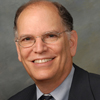
Jeremy A. Sabloff, Ph.D.
Director, SRI Foundation Board of Directors
Jeremy A. Sabloff is the President of the Santa Fe Institute. He formerly was the Christopher H. Browne Distinguished Professor of Anthropology at the University of Pennsylvania, where he served as the Williams Director of the University of Pennsylvania Museum from 1994–2004 (and Interim Director in 2006–2007). He received his B.A. from the University of Pennsylvania and his Ph.D. in anthropology from Harvard University. He is an archaeologist whose principal scholarly interests include: ancient Maya civilization, pre-industrial urbanism, settlement pattern studies, archaeology theory and method, and the history of archaeology. Over the past 40 years, he has undertaken archaeological field research in both Mexico and Guatemala. In addition to the University of Pennsylvania, he previously taught at Harvard University and the Universities of Utah, New Mexico (where he was Chair of the Department of Anthropology), and Pittsburgh (where he also was Chair of the Department). He also was an Overseas Fellow at St. John’s College, Cambridge. Dr. Sabloff is a member of the National Academy of Sciences and the American Philosophical Society and a Fellow of the American Academy of Arts and Sciences and the Society of Antiquaries, London. He is a former President of the Society for American Archaeology and a former Editor of American Antiquity. He is a member of the Visiting Committee for the Peabody Museum, Harvard University and the Advisory Board of the National Museum of Natural History of the Smithsonian Institution. He also was Chair of the Smithsonian Institution Science Commission. He has written or edited more than 20 books, including Archaeology Matters, The New Archaeology and the Ancient Maya, The Cities of Ancient Mexico, and (with Gordon R. Willey) A History of American Archaeology, as well as more than 100 articles, chapters, and reviews. Close Window

Marion Werkheiser, J.D.
Director, SRI Foundation Board of Directors
Marion Werkheiser is an attorney, educator, and nonprofit director. She is a partner with Cultural Heritage Partners, PLLC, a multi-service law and business consulting firm serving clients in the cultural heritage, art, museum and historic preservation communities. Ms. Werkheiser (J.D. Harvard Law School; B.A. Indiana University, political science and classic civilizations) has researched and published on myriad issues related to cultural heritage preservation, including the looting of Iraq’s antiquities, the protection of shipwrecks, criminal prosecutions of theft from U.S. archaeological sites, and the international trade in art and antiquities. For four years she taught an upper level seminar on international and domestic cultural property law at the College of William and Mary Law School, and she has presented her work at conference of the Archaeological Institute of America, Society for American Archaeology, US National Committee of the International Council on Monuments and Sites (US/ICOMOS), and World Archaeological Congress. Closer to home, Ms. Werkheiser has worked with preservation organizations in Virginia to protect sites through local historic preservation ordinances, conservation easements, and adaptive reuse. Ms. Werkheiser previously practiced corporate, regulatory, and international trade law in the Washington, D.C. office of Baker & Daniels. She also served as a legal fellow in the office of U.S. Senator Evan Bayh, briefing the Senator on issues relevant to his service on the Senate Committee on Banking, Housing, and Urban Affairs and coordinating hearings for the Subcommittee on International Trade and Finance. Well versed in grassroots and party politics, Ms. Werkheiser maintains excellent relationships with legislators and staffers on Capitol Hill and in state houses across the country. Close Window